A network entity that takes care of HTTP requests on behalf of the origin web Server. It has its own disk storage where it keeps copies of recently requested objects.
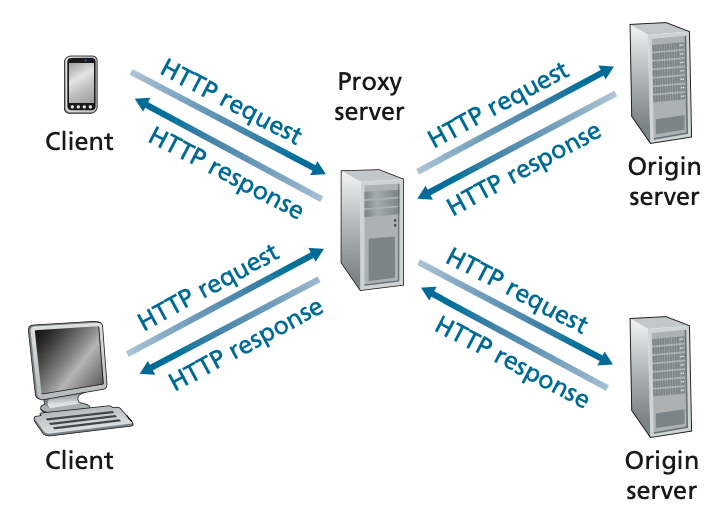
It works by:
- A browser establishes a TCP connection to the Web cache and sends an HTTP request for the object to the web cache.
- The web cache checks if it has a copy stored locally on its disk. If it does the web cache returns the object in an HTTP response message and this process stops. Otherwise, it first opens a TCP connection to the origin Server and sends an HTTP request for the object.
- When the web cache receives the object it stores a copy in its local storage and sends a copy in a HTTP response message to the Client browser.
A web cache is typically purchased and installed by an ISP and are often used in CDNs.
Web caches can use HTTP with a GET=in combination with the header line =If-Modified-Since to update resources. When doing this an object will only be received if it has been modified since the provided date.
Features
- Reduce response time for a client request, especially if there is a faster connection between cache and client than the origin server and client.
- Reduce traffic on an institution’s access link.